


“If you first have to search for the right document during a crisis situation, then your document management is not in order.”
– Jeroen Bleecke, Quality Officer at Reinier van Arkel
‘For us, quality is all about providing safe and excellent care to our clients’
“If you first have to search for the right document during a crisis situation, then your document management is not in order.” With these words, Jeroen Bleecke, Quality Officer at Reinier van Arkel, summarizes the essence of effective document management. For him, it is not an administrative tool, but a crucial component of safe and high-quality care. “Employees must be able to find what they need immediately. Especially in mental healthcare, where situations can sometimes be acute and complex, information simply needs to be available. Without hassle.”
Reinier van Arkel has been providing mental healthcare in the Den Bosch, Vught and Zaltbommel region since 1442. With specialist secondary and tertiary care, forensic departments, child and adolescent psychiatry, and hospital psychiatry, it is a broad and versatile organization. “We may not be the largest mental healthcare institution in the Netherlands,” says Jeroen, “but our range of services is extremely broad. From young children to the elderly, from outpatient care to supported living and forensic care. That also places demands on your quality organization.”
Quality Must Be Connected to Care
Jeroen is part of the Quality & Safety team. His background is in healthcare. He originally started his career as a nurse. That practical experience still shapes his perspective on quality today.
“For me, quality is ultimately about people,” he says. “It has to be connected to day-to-day care. I don’t want to spend hours behind a desk without any connection to what is happening on the work floor. Everything we do must contribute to safe and high-quality care for our clients.”
According to him, this is precisely where the essence of quality management lies. Not in checklists or external pressure, but in supporting professionals in their work. “Quality is often experienced as something that ‘has to be done’. For ISO, for an audit, for an external party. The biggest challenge is to encourage ownership on the work floor. To make employees see it as their quality.”
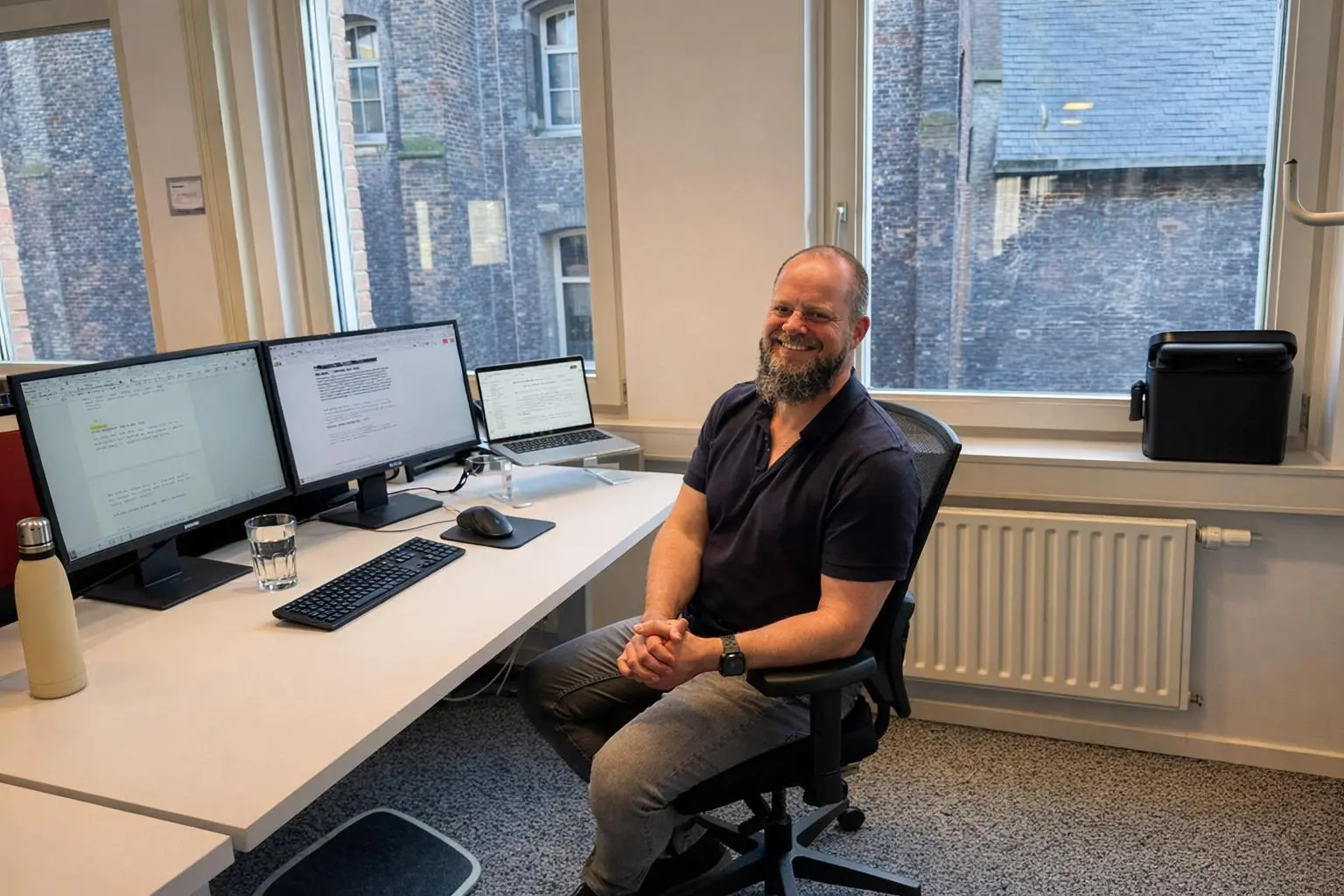
Jeroen Bleecke, Quality Specialist
About Reinier van Arkel
| Main activity | Specialist Mental Healthcare |
| Uses Trevally since | 2006 |
| Uses Trevally for | Document Management |
From a Paper Manual to a Lean System
When Jeroen and his colleagues took stronger ownership of the Trevally document management module, the quality manual was extensive and fragmented. “At one point, we had around 1,600 documents. That was simply too many. Keeping everything up to date took an enormous amount of time.”
Over the past few years, that number has been deliberately reduced. “We brought the number of documents down to approximately 800. I’m genuinely proud of that. Not because less is always better, but because we started looking much more critically: what is truly relevant across the entire organization? What belongs in the manual and what does not?” That process also meant making choices. Some team-specific working arrangements remained outside the central manual in order to keep the system manageable. “You want to prevent your manual from becoming cluttered with highly specific agreements that only apply to a single location. Otherwise, you lose the overview.” At the same time, management became more centralized. “We now have much more control. With six quality officers, we keep the manual up to date. That was a major change, but it brings peace of mind. We are less dependent on individual web editors spread throughout the organization.”
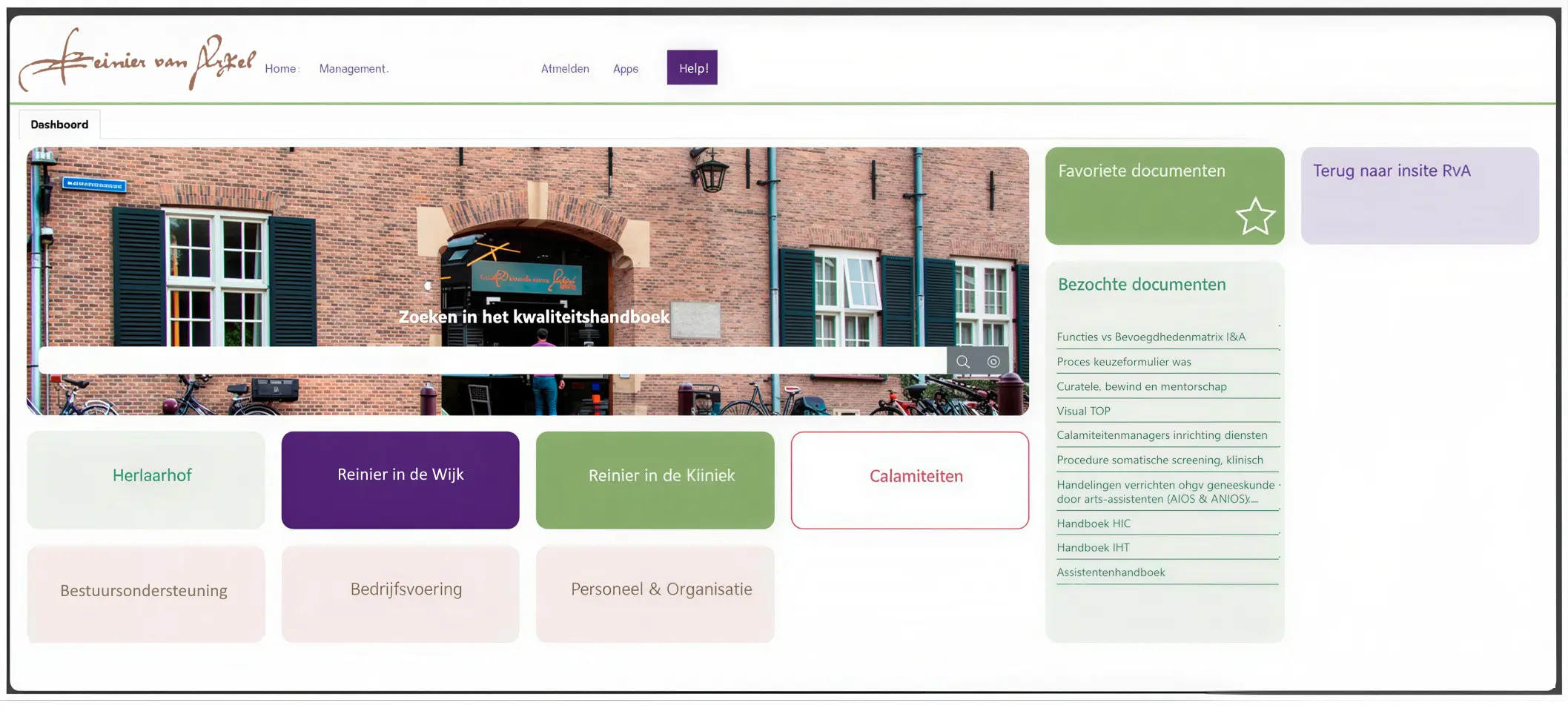
Dashboard for the whole company
Process-Based Thinking as the Next Step
Although document management is firmly established, Jeroen still sees plenty of opportunities to further connect processes and documents. “We want employees to be able to click directly from a process to the documents they need. That makes the manual even more user-friendly.”
Process diagrams have already been partially implemented, but they are not yet linked everywhere to the underlying documents. “That is something we would like to achieve. If, from your role within a process, you can immediately see which documents are relevant to you, then you support the primary process much more effectively.” His ambition is clear: spend less time on administrative tasks surrounding documents and more time on meaningful quality improvement. “We want to spend less energy chasing authorizations and more on the quality of the content.”
What Concrete Benefits Does Trevally Deliver?
According to Jeroen, three clear benefits are visible within Reinier van Arkel:
- Currency and reliability: “We now have an up-to-date manual. That creates confidence, including during audits.”
- Accessibility: Through integration with the intranet and automatic login, the threshold for use has been significantly lowered.
- Overview and control: Through centralization and features such as sub-revisions, management has become more efficient and easier to control.
Pride and Looking Ahead
Jeroen looks back with satisfaction on the developments of recent years. “There was a period when the manual received less attention. We were busy with other matters. I am genuinely pleased that ManualMaster is once again being actively developed and that we started upgrading.”
His pride lies not only in the system itself, but above all in the organization. “The fact that we maintain such a large number of documents with a relatively small team, and that the manual is once again alive within the organization, is something I am proud of. It is no longer a paper tiger.” Finally, he has a clear message for other organizations that work with or are planning to work with Trevally. “Dare to make choices. Keep it lean. Make sure it is visible on your intranet. And above all, keep the conversation going with your employees. A system can do a lot, but ownership only arises when people feel involved.”
For Jeroen, document management is not a goal in itself. It is a foundation for delivering high-quality care. “If my work is not connected to what happens on the work floor, then something is missing. Ultimately, we do this for vulnerable people. Quality must always align with that.”