


'/%3E%3C/svg%3E)


Trevally as a Catalyst for Change: “ManualMaster Has Helped Us Raise Quality Awareness”
With the conviction that quality is everyone’s responsibility, not just one person’s, Sebastiana Piras walks onto the production floor of The Compound Company every day. “Otherwise, nothing changes,” she says. As QESH Manager, Sebastiana is responsible for quality, health & safety, and environmental management within The Compound Company, a business that has experienced rapid growth in recent years. What started as a relatively small company has evolved into an international player in the plastics industry, requiring an entirely different way of working.
Sebastiana explains how, with the help of ManualMaster’s Trevally software, she has created structure, transparency, and organizational buy-in within a company that for a long time relied heavily on ad hoc processes and individual knowledge.
The Compound Company produces plastic compounds by melting polymers, mixing them with additives, and processing them into raw materials for a wide range of industries. The company emerged from a restart of activities previously owned by the Hartman Group in Enschede, where two sites are located. It quickly expanded from around 50 to more than 110 employees through, among other things, the acquisition of parts of DSM in Geleen (now operating as a sales office) and Exxon (now a TCC production site in Cologne), each bringing its own technologies and processes.
Quality as a Shared Responsibility
This growth also brought challenges. “When I started here, the quality manual was literally sitting in a cabinet,” Sebastiana explains. “My predecessor knew how everything worked, but the rest of the organization had no idea. That is the old way of thinking about quality.”
For Sebastiana, this was unacceptable. Drawing on her background in R&D and her strong preference for structured ways of working, she quickly identified the weaknesses in the existing quality management approach. “You can want to change things, but if everyone works in their own way, you end up with chaos.”
The first step was fundamental: quality had to move from being the responsibility of “one person” to becoming part of the entire organization. She started by appointing process owners, making procedures visible, and ensuring the quality management system was accessible to everyone. Trevally played a key role in this transformation. “Quality cannot rest solely on my shoulders. I deliberately embedded it throughout the organization, with clear responsibilities and processes,” she says.

Sebastiana Piras, QESH Manager
About The Compound Company
| Main Activity | Production of plastic compounds |
| Works with Trevally since |
2024 |
| Uses Trevally for |
Document Management, Risk Management, Complaint Management, WebForms, and Q-Learning
|
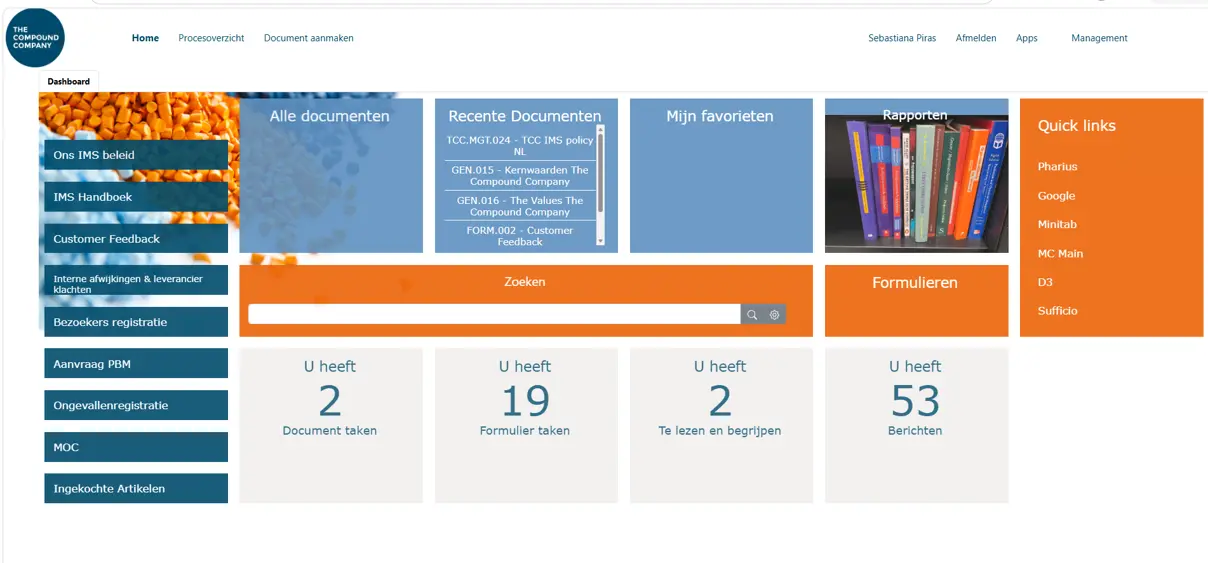
Dashboard The Compound Company
Working with Trevally: From Fragmentation to Transparency
“In the beginning, it was really blood, sweat, and tears. People saw it as extra work. But now, you see them coming to me with ideas and questions themselves.” This shift, from resistance to initiative, is exactly what drives Sebastiana.
The implementation of Trevally marked a breakthrough for The Compound Company. Processes that were previously managed through lengthy email chains and scattered documents are now fully secured within one central system. “Accessibility has improved tremendously. Everyone can now access the quality manual and see exactly where something is within a process,” Sebastiana explains.“Especially the WebForms make a real difference in day-to-day operations. Think about complaint management, change management, and visit reports.”
WebForms: From 25 Emails to One Form
“In the past, complaints came in by email. Sometimes you ended up with 25 emails and had to figure out for yourself what was actually going on. Now we have one form. No form means no complaint.”This clear rule, supported by management, created both discipline and visibility. “It took some getting used to, but now people see the benefits. Everything is documented, traceable, and clear.”
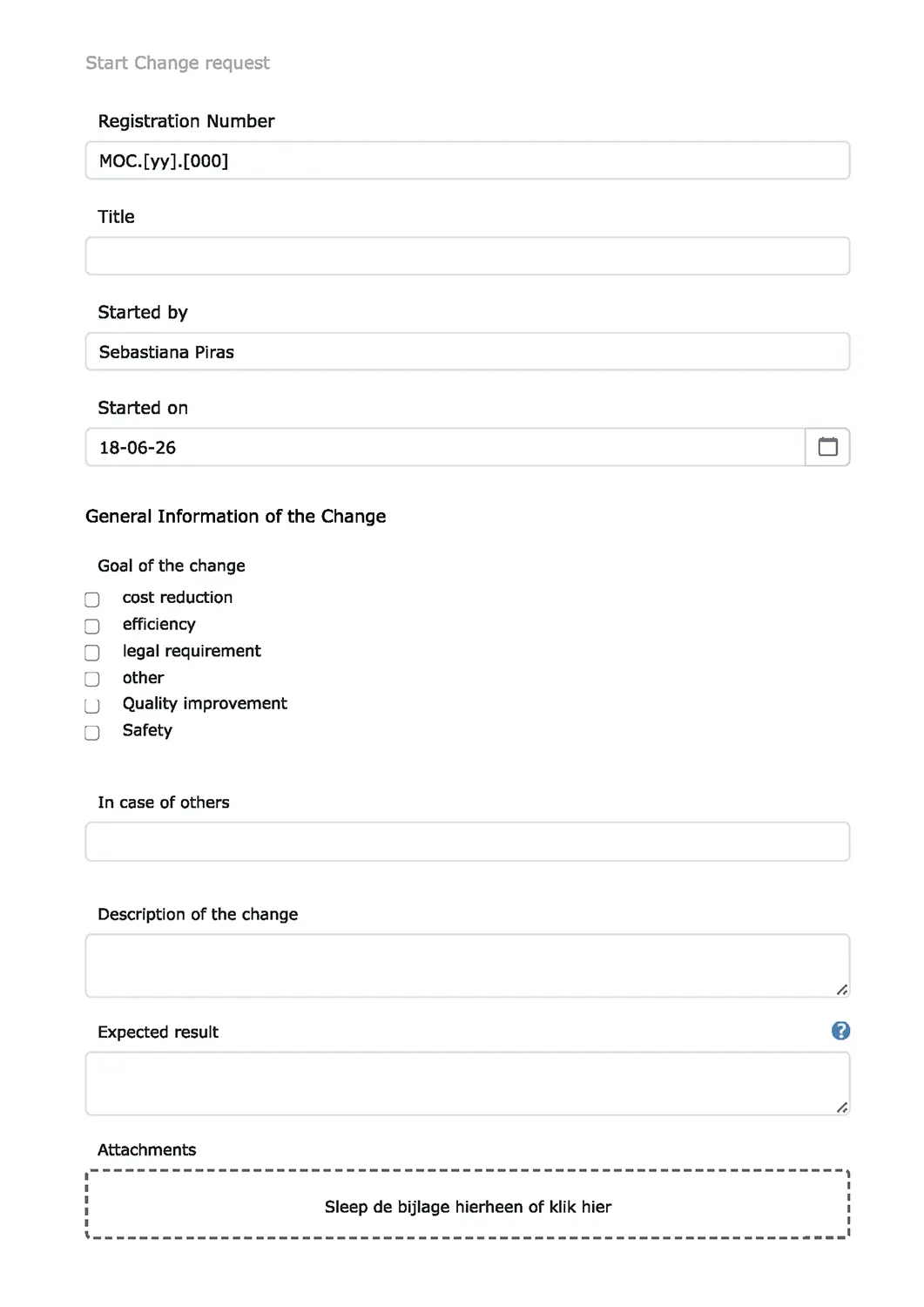
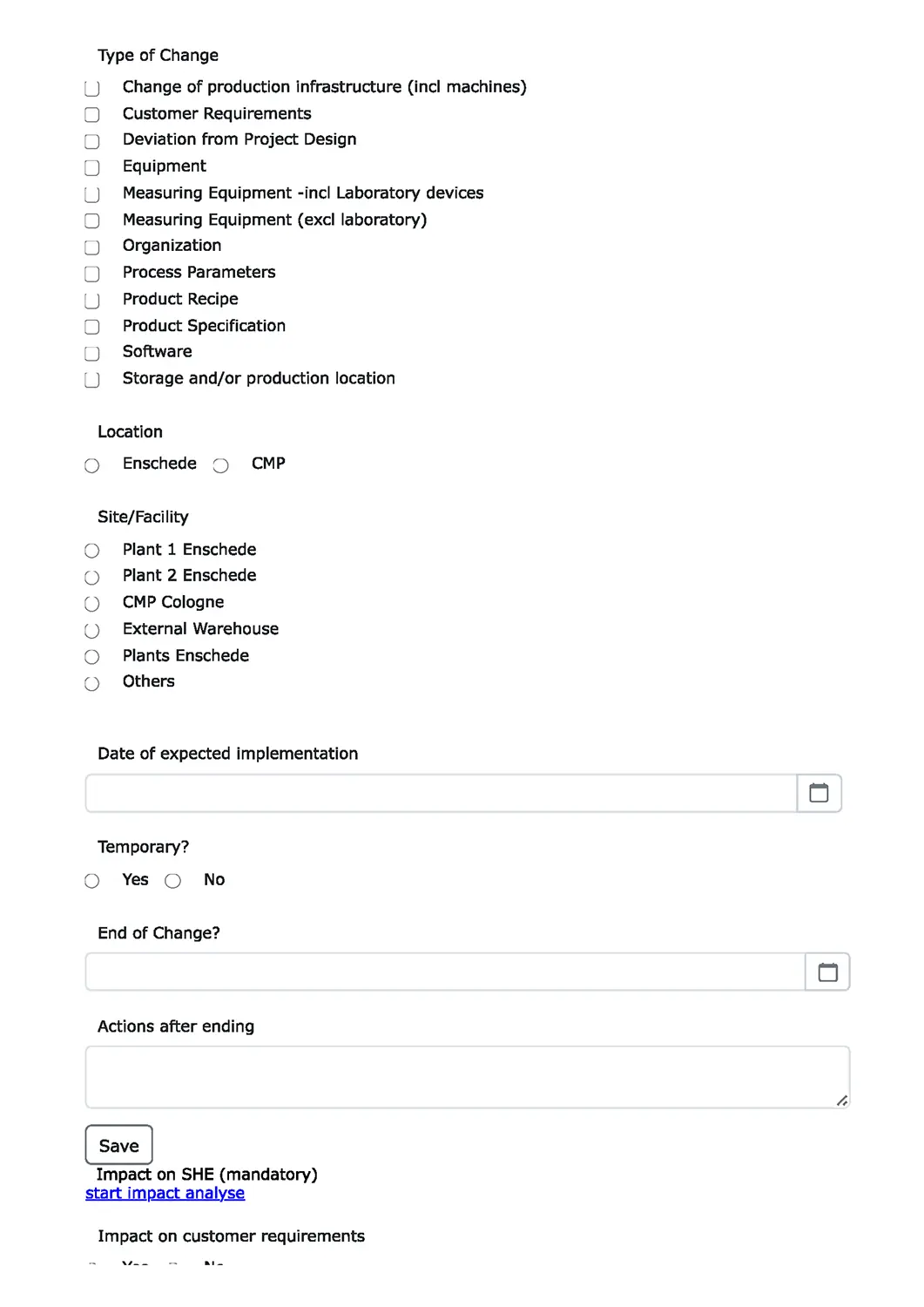
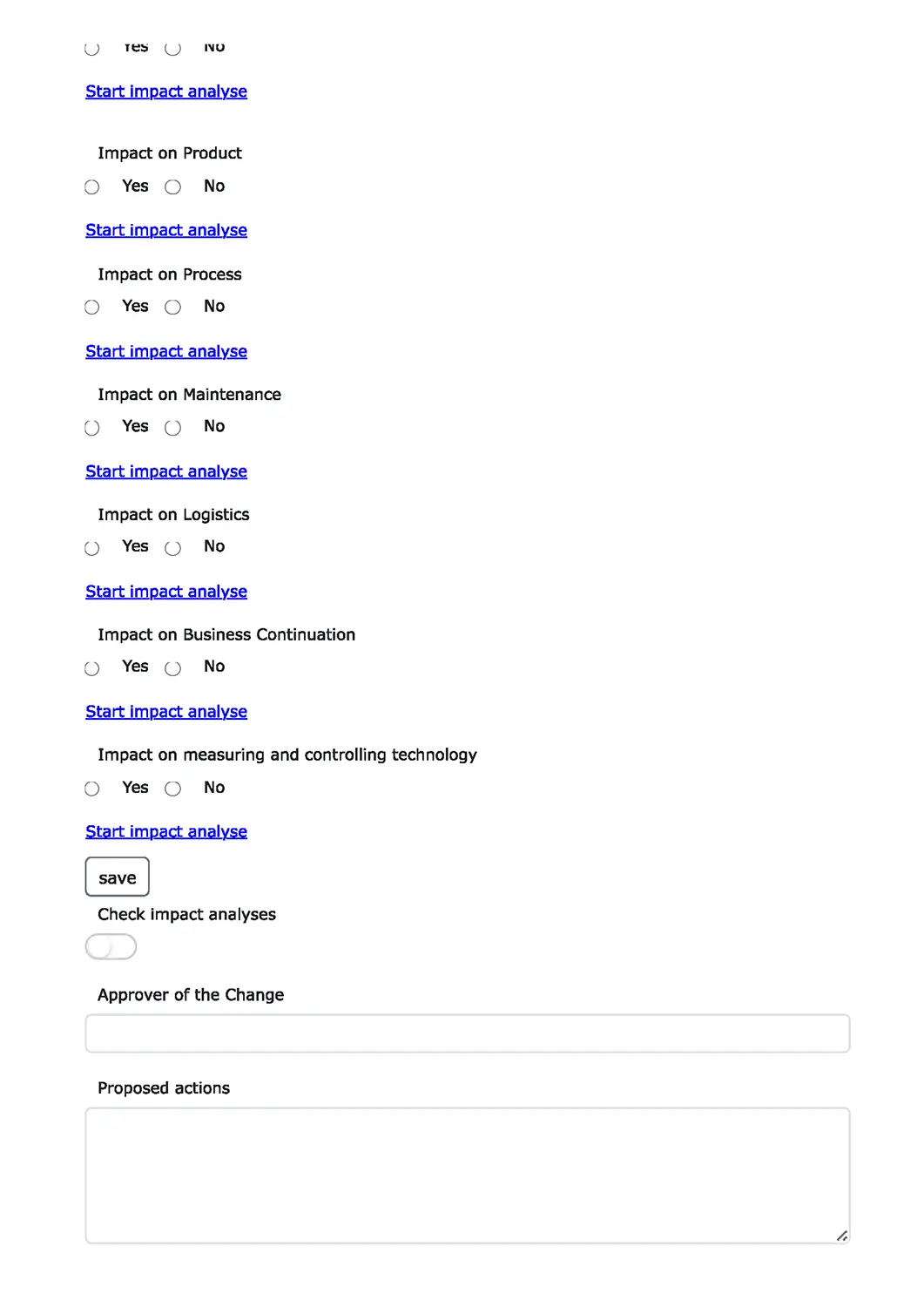
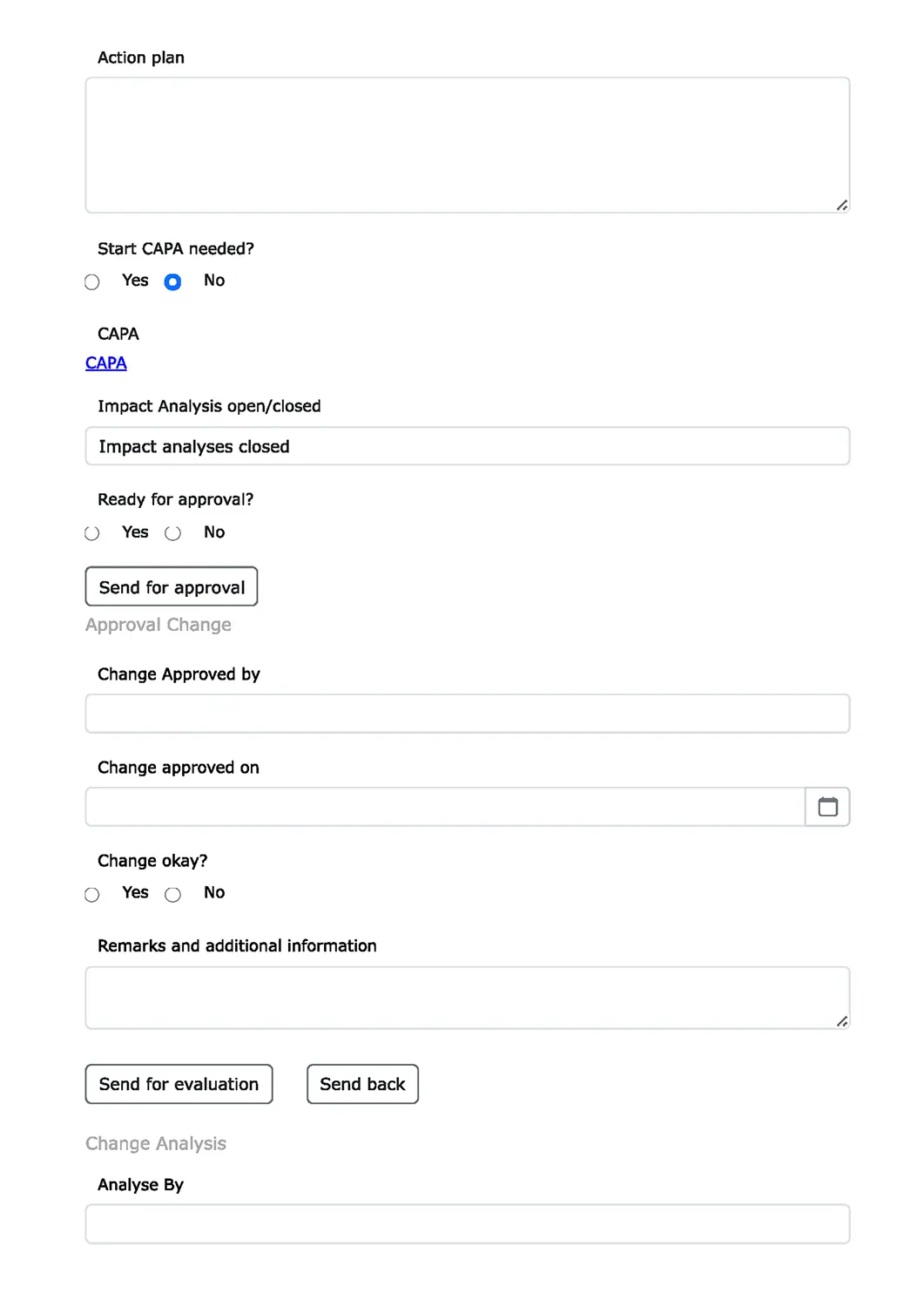
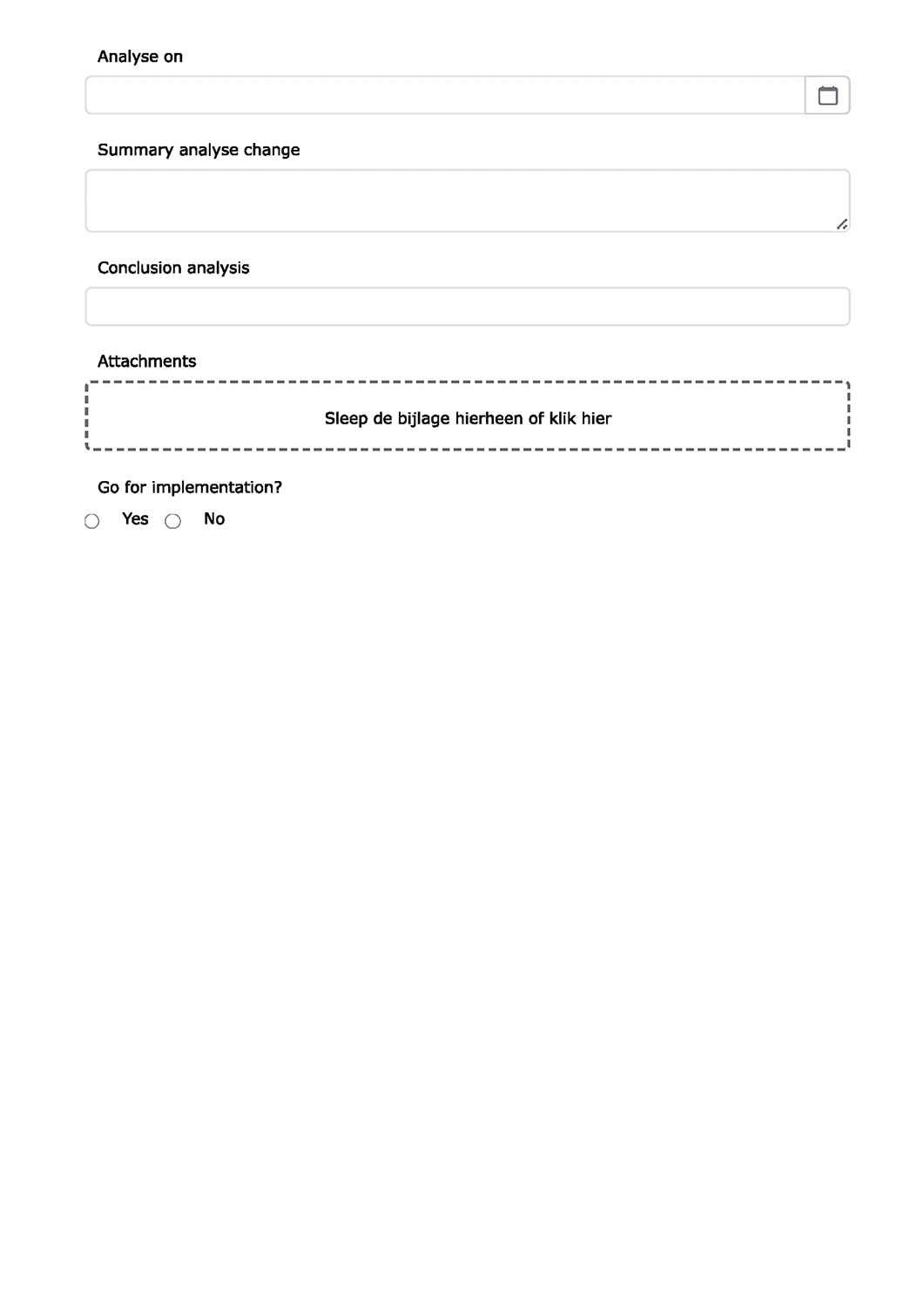
WebForm MOC
Smart Workflows That Make Work Easier
Sebastiana designs many of the forms in Trevally herself. She focuses not only on functionality but also on practicality and ease of use. “Forms need to be short and clear. If people have to fill out an entire page, they lose interest.”
One of the most impressive applications is the Management of Change (MoC) process. Within this workflow, risk assessments are automatically initiated based on the type of change being submitted. “When someone enters a product change, the system automatically determines which risk assessment is required. It is then sent directly to the appropriate owner.” The result is fewer errors, faster decision-making, and greater involvement across the organization.
Cultural Change: From Resistance to Ownership
Perhaps Sebastiana’s greatest achievement is not the technology itself, but the cultural transformation that accompanied it. “The biggest challenge was getting long-serving employees on board,” she says. “They were used to doing everything their own way.” Her approach? Patience, visibility, and communication. “I spend a lot of time on the shop floor. You need to talk to people, bring them along in the process, and continuously explain why something is important.”
And it works. “Now people come to me with questions themselves: ‘Sebas, can we improve this?’ That is the real change.” She also sees that new employees, many of whom come from larger organizations with more structured processes, are helping to drive the company’s culture forward.
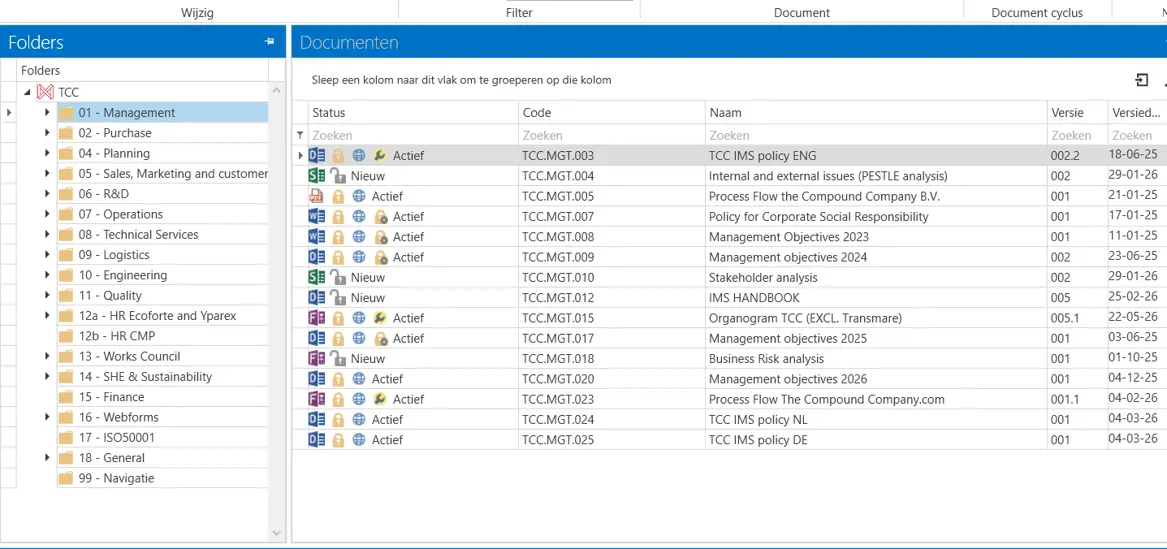
Folder Structure of The Compound Company
Q-Learning and International Rollout
In addition to document, risk, and complaint management, The Compound Company also uses Q-Learning. The main reason? Efficiency. “In Germany, employees used to be taken away from their regular work for an entire week of training. That required a huge investment of time. With e-learning, we can do it much more efficiently.” The module has already been rolled out successfully at the Cologne site and is increasingly being used in the Netherlands as well.
Sebastiana is even looking beyond the current organization. She hopes that the company’s parent organization in Italy will also adopt Trevally. “My dream is for them to start using this system too. It would significantly improve collaboration.”
Everyone Knows Their Responsibilities
When asked what she is most proud of, Sebastiana does not hesitate. “People work together better because it is clear who is responsible for what.” According to her, this transparency is the key to success. “People now understand that documenting things properly is beneficial and not just extra administration. That shift in mindset is a real breakthrough.”
At the same time, the journey is far from over. The Compound Company continues to grow, and that growth requires ongoing professionalization. “The organization has grown faster than its structure. We need to make sure we keep pace with that.” She also wants to make greater use of data, dashboards, and supplier evaluations. “There is still so much potential in Trevally. We are only using a fraction of what it can do.”
What Works, and What Doesn’t
Over the years, Sebastiana has developed a clear vision of what works and what does not. Her advice is practical and easy to apply: “Start small, but do it properly.”
Rather than trying to implement a complete system all at once, she recommends focusing on one process that can deliver immediate value. “We started with a single complaint form. That immediately created structure and generated results. From there, you can expand.”
Her second recommendation is equally important: “Make the system as simple as possible for the end user. Think from the perspective of the people on the shop floor. They do not have time for complicated forms. The simpler and clearer it is, the more likely they are to use it.”

On the Shop Floor: Listen, Explain, and Support People
“Be visible and approachable,” she continues. “You can’t manage this from an office. You need to get out onto the shop floor, listen, explain, and help people. That’s how you build trust.”
Management support is equally important. “Without support from the top, it doesn’t work. We could only introduce the rule ‘no form, no complaint’ because leadership stood behind it.”
In Sebastiana’s view, communication is an ongoing process. “People forget things and fall back into old habits. Repetition is absolutely crucial.” Above all, she stresses the importance of patience and accepting resistance as part of the journey.
“Change takes time. In the beginning, you will face resistance, and that’s completely normal. If you stay the course, you’ll eventually see people come along with the change.”
Trevally Is More Than Software, It’s a Way of Working
Sebastiana’s story makes it clear that Trevally is more than just software for The Compound Company. It has become a catalyst for change.
“ManualMaster has truly helped us raise quality awareness throughout the organization.” Ultimately, however, it all comes down to people. To behavior, accountability, and collaboration. And perhaps most of all, to the belief that started it all: “Quality belongs to everyone.”